

Review & Reflect: An Honest, Nervous-System-Friendly Year-End Check-In
For a lot of helpers and hope-bringers, “year-end reflection” feels… loaded.
You might think of:
- color-coded planners you never had time to fill,
- reflection questions that assume you were well-resourced all year,
- or visioning exercises that skip right over the very real grief, stress, and complexity you’ve been holding.
If your first instinct is, “I already know I didn’t do enough,” you are not alone.
There’s another way to look back—one that honors your nervous system, your reality, and the many invisible ways you kept going.
That’s what Review & Reflect inside the December Restoration Sessions is all about.
Why Traditional Year-End Reviews Feel So Hard
Most mainstream reflection tools are built for:
- people with consistent capacity,
- predictable schedules,
- and a lot of control over their time and environment.
If you’re a caregiver, educator, clinician, creative, or other helping human, your year probably looked nothing like that. You were:
- responding to other people’s needs,
- living in systems that don’t always support you,
- navigating your own health, grief, and stress,
- and doing a lot of invisible, emotional labor.
So when a worksheet asks, “Did you hit all your goals?” your body may read that as a threat, not an invitation.
An honest, nervous-system-friendly review starts from a different place:
“What was it like to be you this year?”
From there, we can gently explore what helped, what hurt, and what you’d like to carry forward.
A Whole-Person Review: Heart, Mind, Body, Soul
Instead of treating your year as a list of accomplishments, we move through four quadrants:
- Heart – emotions & relationships
- Mind – mental load, organization, work & learning
- Body – stress, energy, and physical care
- Soul – rest, play, spirituality, and meaning
You don’t have to fill in every box. Even one question can be enough.
Heart: How Did It Feel to Be You?
Questions to gently consider:
- What emotions visited you most often this year?
- Where did you feel most seen or cared for by others?
- Where did you feel most alone or misunderstood?
- Is there one relationship that felt like an anchor? One that felt like a drain?
You don’t need neat answers. You’re just letting your heart tell the truth about what it carried.
Mind: What Was Your Mental Load Like?
Here we’re talking about:
- planning, remembering, tracking, managing,
- all the “invisible project management” of life, work, and care.
You might ask:
- What were you constantly thinking about or worrying over?
- Where did your mind feel overloaded?
- Were there systems or rhythms that genuinely helped you?
- Is there one thing you wish you could stop managing alone?
This isn’t about judging your productivity. It’s about honoring how hard your brain has been working.
Body: How Did Your Body Carry the Year?
Your body has been on your side all year, even if the way it showed it was through:
- tension,
- fatigue,
- stomach trouble, headaches, flare-ups,
- or “I’m so tired I could cry.”
Try asking:
- Where did stress live in your body this year (jaw, shoulders, gut, etc.)?
- When did your body say “too much” and you finally listened?
- Were there any tiny practices that helped—even once? (breath, stretching, water, moving, lying down)
You’re not grading your health; you’re listening to the ways your body tried to talk to you.
Soul: Where Did Your Soul Catch Its Breath?
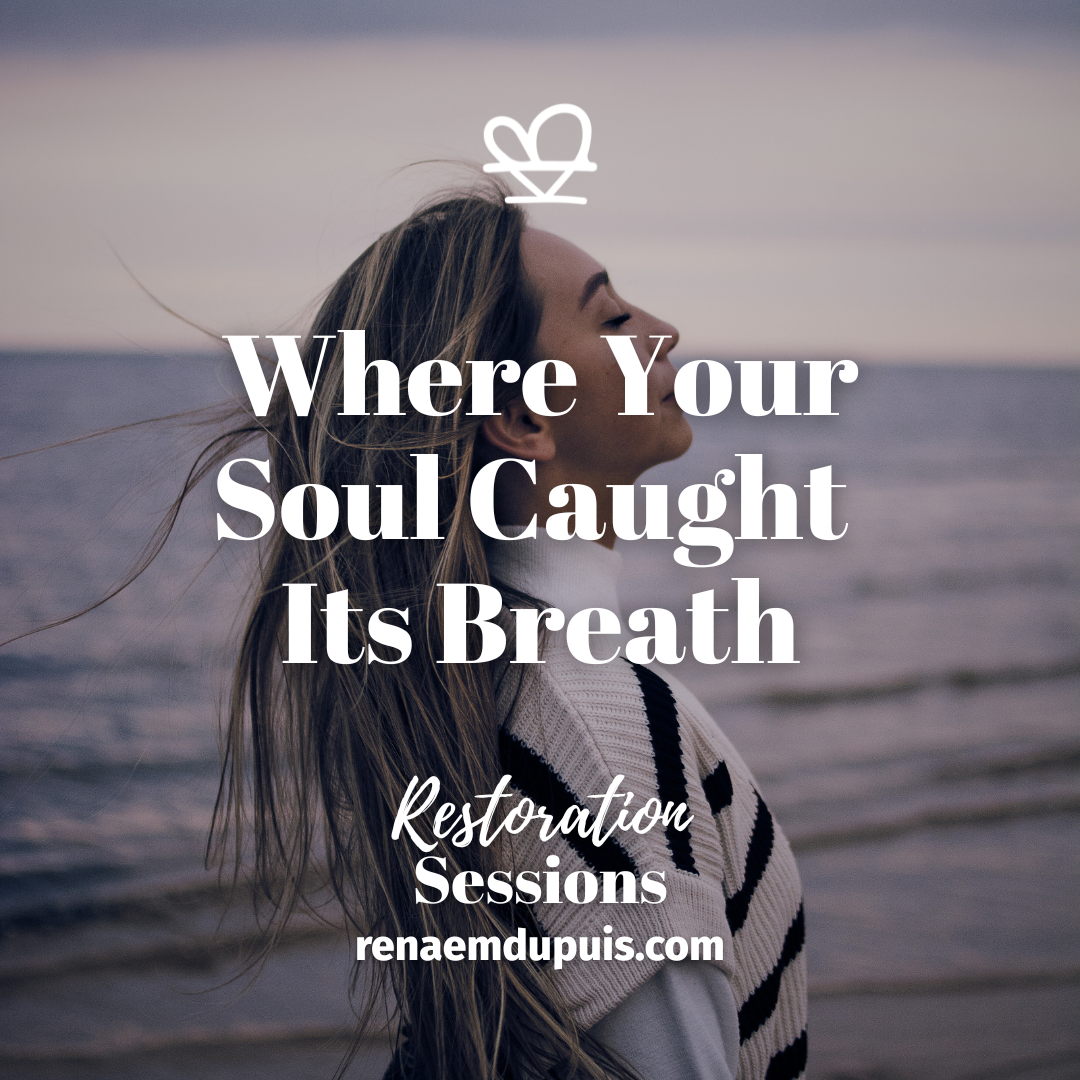
By “soul,” I mean the part of you that longs for meaning, wonder, and rest. That might include spirituality, creativity, connection, or simple moments of quiet.
Questions to explore:
- Where did you feel most like yourself this year?
- Were there any small joys that kept you going?
- Did you have any moments of awe, laughter, or deep exhale?
- What did you miss that you’d like more of in the year ahead?
Even if those moments felt rare or fleeting, they still count.
A Simple Review & Reflect Practice You Can Try Today
You don’t need a special journal to start. A scrap of paper or notes app is enough.
- Draw four boxes or write four headings:Heart • Mind • Body • Soul
- For each one, complete just one sentence:
- Heart: “This year my heart felt a lot of…”
- Mind: “This year my mind kept trying to hold…”
- Body: “This year my body was asking for…”
- Soul: “This year my soul lit up when…”
- Pause after each sentence. Notice how your body responds—tightening, softening, tears, nothing at all. All of that is information.
- End by writing:
“I made it here. That already matters.”
That’s it.
No scoring, no fixing, no homework.
Just noticing.
How the December Restoration Sessions Can Support You

Inside the December Restoration Sessions: Your Next Best Step, we’ll walk through Review & Reflect in a guided, trauma-informed way.
You’ll get:
- short, experiential practices for each quadrant (Heart, Mind, Body, Soul),
- gentle prompts to help you name what was real—without getting stuck in shame,
- creative tools (like journaling layouts and simple visuals) you can reuse next year.
You don’t have to do this alone at your kitchen table at midnight.
You’re allowed to be held while you look back.
If your body exhaled reading this, you’re invited to join us for the December Restoration Sessions and let Review & Reflect be your first, kinder step into what’s next.
Get your free ticket – https://renaemdupuis.com/restoration-sessions/